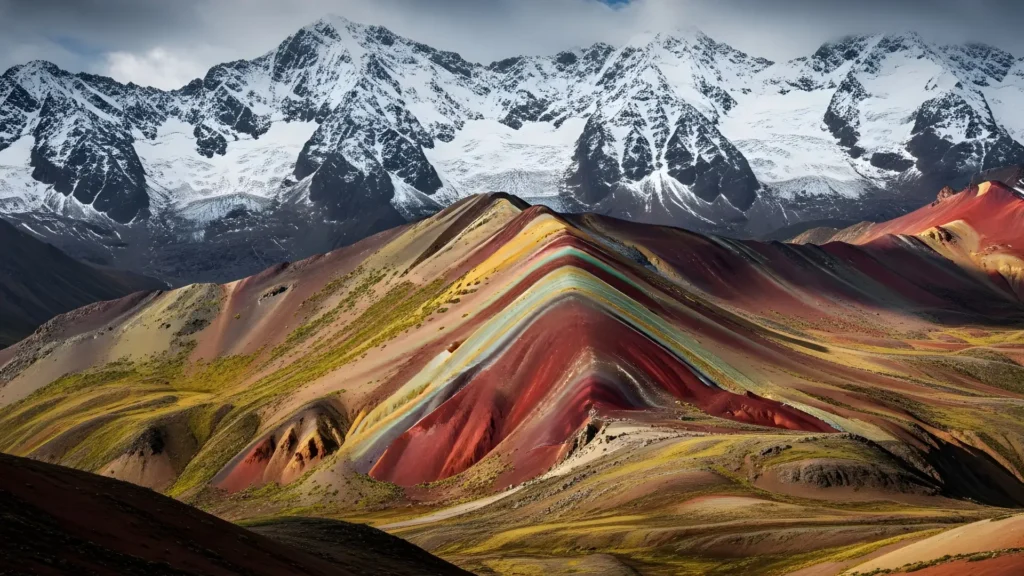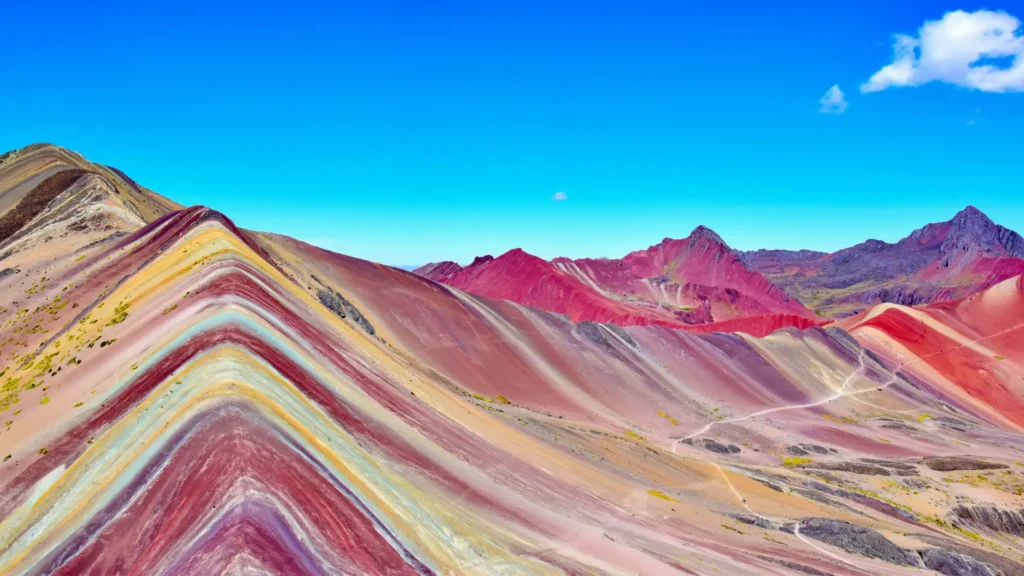
Visiting the rainbow mountain vinicunca is a top priority for most travelers heading to Peru. This natural masterpiece, located deep within the Andes, has transformed from a hidden local secret into one of the most photographed destinations on the planet. Travelers from across the globe visit this site to witness the vibrant stripes of turquoise, gold, and maroon that decorate the mountain’s slopes.
Furthermore, reaching the summit is more than just a visual experience; it is a personal challenge that rewards you with views of the massive Ausangate glacier. Consequently, understanding the history and preparation required for this trek is essential for a successful journey with Machu Picchu Mountain Tours
What is Rainbow Mountain Vinicunca?
To appreciate this destination, one must look beyond its aesthetic appeal. Located at an altitude of approximately 5,200 meters above sea level in the Cusco region, the rainbow mountain vinicunca is part of the Vilcanota mountain range. For centuries, this mountain was covered by thick layers of ice and snow. However, due to global warming, the glaciers melted, revealing the spectacular colors hidden beneath the surface.
The Geological Wonder of the Vinicunca Seven Colors
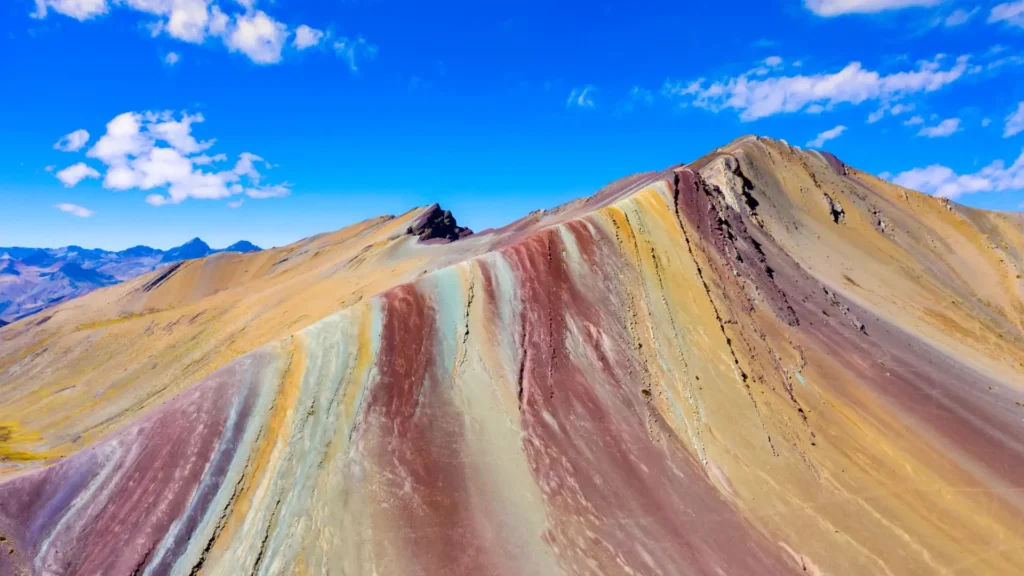
The science behind the “Seven Colors” is truly fascinating. According to geologists, the distinct hues are the result of complex mineralogical compositions that reacted over millions of years. For example, the red tones are caused by oxidized iron (clay), while the bright yellows come from iron sulfides.
Additionally, the turquoise shades are a product of chlorite and phyllites. Notably, these minerals were layered one on top of another through tectonic movements, creating the unique “painted” appearance that we see today. Therefore, every step you take on the trail is literally a walk through Earth’s ancient history.
Why is it Called the “Mountain of Seven Colors”?
In the local Quechua language, the term “Vinicunca” is derived from two words: “Wini,” which refers to the black stones that abound in the area, and “Cunca,” meaning “neck.” This name describes the shape of the mountain pass. Locally, it is also known as “Cusco’s Rainbow” or the “Mountain of Seven Colors.”
It is important to note that for the surrounding communities, the mountain holds deep spiritual value. They believe that these peaks are “Apus” or sacred protectors. “The mountains are alive and watch over us,” is a sentiment often shared by the local guides who accompany visitors on this arduous climb.
How to Prepare for the Rainbow Mountain Vinicunca Hike?
Preparation is the most critical factor when planning a visit to the rainbow mountain vinicunca. Because the trail is located at a high elevation, you cannot simply show up and start walking without a plan. Proper gear, timing, and physical readiness will ensure that your experience is enjoyable rather than exhausting.
The Best Time to Visit Vinicunca for Clear Skies
Weather in the Andes can be unpredictable; however, there are two distinct seasons to consider. The dry season, which runs from April to October, is generally the best time for hiking. During these months, the skies are usually bright blue, providing the perfect contrast for your photographs.
In contrast, the rainy season (November to March) often brings thick mist and snow. While the landscape looks dramatic, the colors of the mountain may be obscured by clouds. Therefore, if your main goal is to see the vibrant stripes clearly, we recommend booking your tour during the Andean winter.
Managing Altitude on the Rainbow Mountain Vinicunca Trek
The summit of the rainbow mountain vinicunca sits at over 17,000 feet. Consequently, altitude sickness (locally known as “soroche”) is a common concern for many trekkers. To avoid discomfort, it is mandatory to spend at least two or three days in Cusco before attempting the hike.
During this Cusco acclimatization period, you should stay hydrated and eat light meals. Many travelers find that drinking traditional coca tea or chewing coca leaves helps significantly with oxygen absorption. Remember that “patience is your best ally at high altitudes,” so listen to your body and maintain a steady, slow pace during the ascent.
Tours and Routes: Reaching the Rainbow Mountain Vinicunca Summit
Once you are ready to conquer the rainbow mountain vinicunca, you need to decide which route fits your travel style. While most people choose the direct path, there are several ways to experience this landscape. Selecting the right tour will determine your comfort level and the amount of time you spend admiring the views.
Choosing the Right Vinicunca Trekking Option
The most popular option for visitors is the classic Vinicunca day trip. This tour typically begins very early in the morning, around 4:00 AM, to ensure you reach the mountain before the largest crowds arrive. Moreover, it is a convenient choice if you have limited time in Cusco but still want to see the main attraction.
On the other hand, adventurous travelers might prefer a multi-day trek. These routes often combine a visit to the rainbow mountain vinicunca with a circuit around the Ausangate mountain. By choosing this option, you spend more time in nature and get to see remote lagoons that few tourists ever visit.
What to Expect During the Ascent
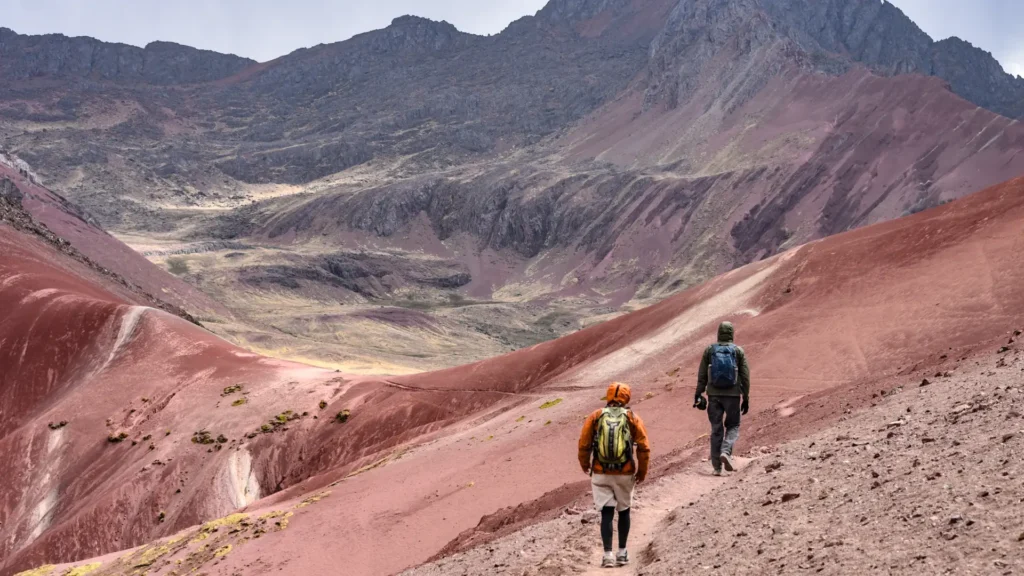
The walk to the viewpoint is relatively short but physically demanding due to the thin air. Usually, the hike takes between 1.5 to 2 hours to complete. Although the trail is well-marked and mostly flat at the beginning, the final stretch is quite steep. For this reason, many locals offer horse rentals for those who find the climb too challenging. However, even if you ride a horse, you will still need to walk the final few meters to reach the official lookout point.
The Red Valley Detour
If you have extra energy after seeing the main peaks, you should definitely visit the Red Valley. Often described as a [hidden gem] (External Link), this area looks like a landscape from Mars. The soil is a deep, saturated red that contrasts beautifully with the green patches of Andean grass. Because fewer people visit this section, it offers a much quieter and more contemplative experience compared to the main summit.