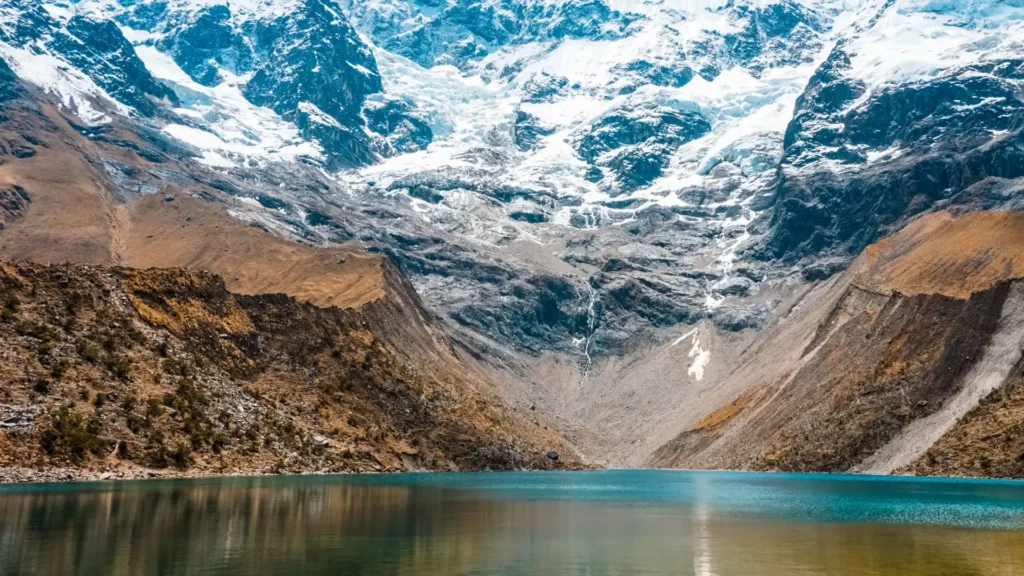
Trekking through the high Andes requires immense physical preparation and mental fortitude. Many travelers dream of reaching the legendary humantay lake, only to be held back by entirely valid safety concerns. Specifically, the extreme elevation and unpredictable weather patterns make this particular route a daunting physical challenge.
These fears are rapidly magnified by the harsh reality of budget travel in Peru. Standard operators routinely pack tired tourists into cramped, unventilated vans long before dawn. Consequently, hikers arrive at the trailhead already exhausted, fighting nausea, and completely lacking the personalized support needed to conquer elevations exceeding 13,000 feet.
However, conquering this glacial wonder is a majestic achievement that becomes entirely safe when you partner with the right experts. By choosing a premium private expedition, you replace anxiety with deep confidence. Our elite local guides meticulously manage your pacing while providing continuous access to medical-grade oxygen. Therefore, you can focus exclusively on the triumphant feeling of reaching those stunning turquoise waters.
Exactly How Far is Humantay Lake from Cusco? The Complete Breakdown
Planning a successful high-altitude excursion requires precise logistical clarity. When discerning travelers ask exactly how far is humantay lake from cusco, they are usually looking for a combination of driving distance and actual hiking mileage. Understanding this detailed breakdown is essential for managing your energy levels safely.
Specifically, the physical road distance from the historic center of Cusco to the starting point at Soraypampa is approximately 120 kilometers (75 miles). This drive typically takes roughly three hours each way. Initially, you travel along a smoothly paved highway toward the town of Mollepata, where most groups stop for breakfast.
Afterward, the journey transitions to a winding, unpaved mountain road that slowly climbs deep into the Vilcabamba mountain range. Consequently, the quality of your transportation heavily dictates how you will feel upon arrival. Spending three hours in a cramped, poorly ventilated minibus guarantees you will start your hike with aching joints.
Conversely, arriving in a plush, climate-controlled private van ensures your muscles remain relaxed and ready for physical exertion. Once you arrive at the Soraypampa base camp, the actual hiking distance begins. The trail to the lake is relatively short but intensely steep, covering exactly 3.4 kilometers (2.11 miles) round trip.
You will face a relentless elevation gain of roughly 400 meters (1,300 feet) in a very short span. For the average hiker, the ascent takes between 1.5 to 2 hours, while the descent requires about 45 minutes. Therefore, optimizing your travel conditions before the hike is crucial for your success on the mountain.
| Feature | Standard Budget Bus | Premium Private Van (Our Service) |
|---|---|---|
| Travel Time (Cusco to Trailhead) | 3.5 – 4 Hours (Multiple hotel pickups) | 2.5 – 3 Hours (Direct departure) |
| Seating & Legroom | Cramped, minimal recline space | Spacious captain’s chairs, ample legroom |
| On-Board Amenities | None | Blankets, hydration, climate control |
| Safety Equipment | Basic first aid only | Medical-grade oxygen tanks onboard |
| Arrival Condition | Fatigued, stiff, often nauseous | Rested, acclimatized, energized |
The Science Behind the Blue Waters of Humantay Lake
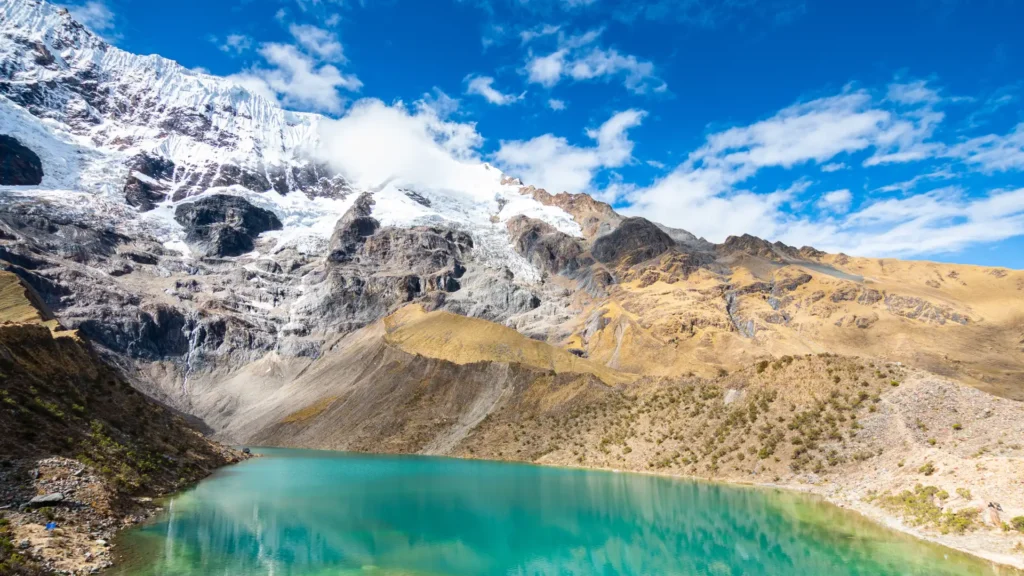
Reaching the summit rewards you with a visual spectacle that defies logic. The water radiates an impossibly bright shade of turquoise, contrasting sharply against the jagged, snow-capped peaks of the Salkantay mountain range. Naturally, visitors constantly wonder what causes this intense, almost unnatural coloration.
The explanation relies entirely on precise geological and biological factors, rather than local myths. As the massive Humantay glacier slowly grinds against the bedrock above, it pulverizes the stone into a microscopic dust known as glacial flour. This incredibly fine sediment is subsequently carried down by melting ice and suspended in the lake’s freezing waters.
Because these particles are so small and lightweight, they do not sink to the bottom immediately. Instead, they remain suspended in the water column. When high-altitude sunlight hits the lake, these suspended particles selectively absorb longer wavelengths of light (like reds and yellows) while scattering the shorter, higher-energy wavelengths (blues and greens).
The Geological Composition of Humantay’s Colors The distinct hue of this glacial lake is the result of three specific scientific phenomena interacting at high altitude:
- Microcrystalline Suspension: Silicate minerals ground down by glacial friction remain suspended, acting as millions of microscopic prisms.
- Cyanobacteria Presence: Specific strains of cold-water microalgae thrive in these highly oxygenated waters, contributing distinct green pigments to the blue light scattering.
- Solar Refraction: At 4,200 meters, the atmosphere is significantly thinner, allowing high-intensity UV light to penetrate the water, amplifying the visual saturation of the scattered blue wavelengths.
Therefore, the color you perceive changes dramatically depending on the weather and the time of day. Under direct midday sunlight, the water appears brilliantly cyan. However, when heavy clouds roll over the surrounding peaks, the lake can suddenly shift to a deep, moody emerald green. Understanding this science adds a profound layer of appreciation to your overall Peruvian Andes Exploration
Overcoming Altitude on the Humantay Lake Trek: Professional Protocols for Your Safety
The physical challenge of this trek is rarely the steep terrain itself. Instead, it is the severe lack of oxygen. At 4,200 meters (13,780 feet) above sea level, each breath pulls in roughly 40% less oxygen than it would at the coastline. Consequently, your cardiovascular system must work significantly harder just to maintain basic bodily functions.
Altitude sickness, or Acute Mountain Sickness (AMS), does not discriminate based on your age or physical fitness level. Even experienced athletes can find themselves dizzy and nauseous if they ascend too quickly without proper pacing. Therefore, attempting this trail without elite professional support is a dangerous gamble.
Our premium approach fundamentally eliminates this risk by treating your physiological safety as our absolute highest priority.
“The biggest mistake travelers make is treating this high-altitude trail like a race. In my 15 years of guiding in the Vilcabamba range, I’ve learned that the mountain always demands respect. We utilize a micro-pacing technique, actively forcing our clients to walk 20% slower than they feel they need to. Combined with our portable oxygen systems, this specific strategy neutralizes the threat of severe altitude sickness, guaranteeing they reach the summit safely.” — Wilfredo Cjumo Lopez, Senior Lead Guide at Machu Picchu Mountain Tours
We never rely on mere good luck on the mountain. Specifically, every single one of our guides carries a comprehensive medical kit and a pulse oximeter to monitor your exact blood-oxygen levels throughout the hike.
If you begin to feel the effects of hypoxia, we administer pure medical-grade oxygen instantly, resolving the symptoms before they escalate. Ultimately, this level of meticulous care is what separates a risky amateur walk from a perfectly safe, premium expedition.
Beating the Crowds at Humantay Lake: Elevate Your Alpine Experience
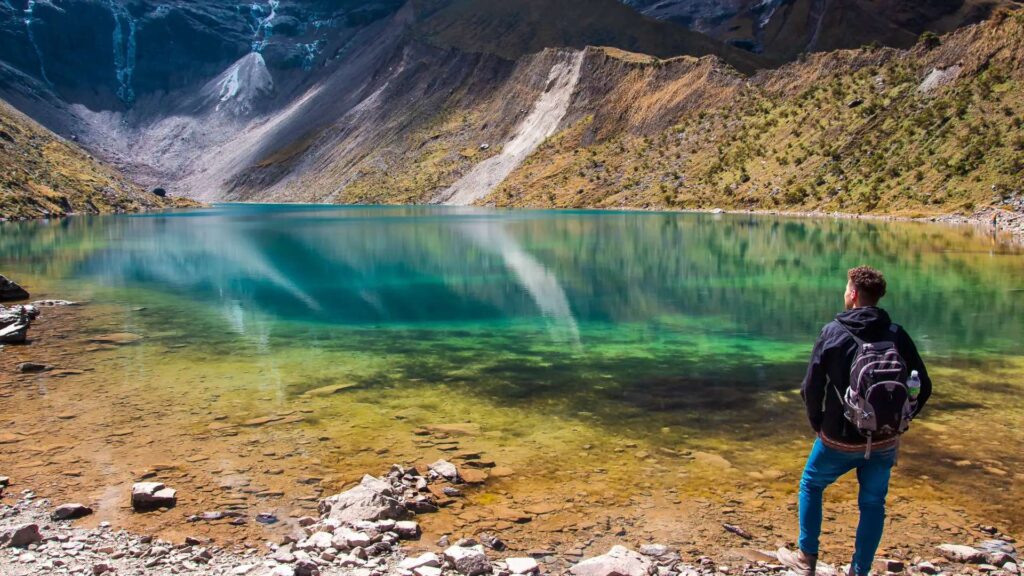
In recent years, the popularity of this destination has absolutely exploded. By mid-morning, the narrow alpine trail frequently transforms into a chaotic, stressful bottleneck. Hundreds of hurried tourists from budget agencies flood the valley, shouting loudly and completely destroying the serene tranquility that makes the mountains so special.
You value your time immensely, and spending your vacation dodging crowds is unacceptable. Therefore, strategic timing and exclusive logistical planning are paramount to securing a truly majestic experience. By booking a premium private tour, you unlock the exclusive ability to dictate your own schedule entirely.
We purposefully design our departure times to bypass this massive tourism wave. Specifically, by leaving Cusco slightly earlier in a fast, comfortable private vehicle, we ensure that you are among the very first to arrive at the Soraypampa trailhead. Consequently, you will hike up the mountain in absolute silence, accompanied only by the natural sounds of shifting glacial ice.
This exclusivity extends far beyond just avoiding crowded paths. Having a private guide means you can spend an entire hour at the summit taking flawless, empty-background photographs. Ultimately, choosing an oxygen-equipped expedition transforms a grueling ordeal into an elegant triumph. When you are ready to conquer the Andes on your own terms, you can seamlessly Book Your Private Humantay Expedition