Cusco Where to Stay: Premium Luxury District Guide
calendar_todaypersonWilfredo Cjumo Lopezschedule5 min de lecturafolderGuides
Booking a five-star hotel online looks simple until you step off the plane into 11,152 feet of elevation. Many premium travelers choose accommodations based purely on polished room photography, completely unaware of the surrounding topography. When your private transport drops you off blocks away because the street is too narrow for vehicles, or you discover your luxury suite sits at the top of a punishing, steep incline, your arrival turns into an immediate physical struggle.
This initial oversight triggers more than just inconvenience; it directly compromises your health. Your first 48 hours require strict physical rest to acclimatize properly. Forcing your body to climb historic cobblestone hills under low oxygen levels drastically increases your risk of altitude sickness. Instead of enjoying fine dining, you face intense headaches, nausea, and sleepless nights.
To make matters worse, several historic buildings lack modern soundproofing, meaning local traffic and nightlife echo through your room, ruining the deep sleep necessary for recovery. A poorly placed luxury property quickly drains your limited time, money, and energy.
Eliminating these logistical risks requires precise local intelligence before you finalize your reservation. This comprehensive guide details the exact neighborhoods that guarantee flat vehicular access, advanced oxygen infrastructure, and quiet environments.
By selecting your base using field-tested data from local specialists, you safeguard your physical well-being and protect your itinerary. The expert destination planners at Machu Picchu Mountain Tours have mapped the historic core to ensure your stay remains elite, secure, and entirely stress-free from the moment you land.
The Critical Importance of Location for Altitude Acclimatization
Arriving in Cusco presents an immediate challenge to the human respiratory system due to the sudden drop in atmospheric pressure. Because the city rests at an elevation of 11,152 feet, your body must adjust to lower oxygen availability. Consequently, your choice of accommodation acts as the foundation for your entire peruvian expedition.
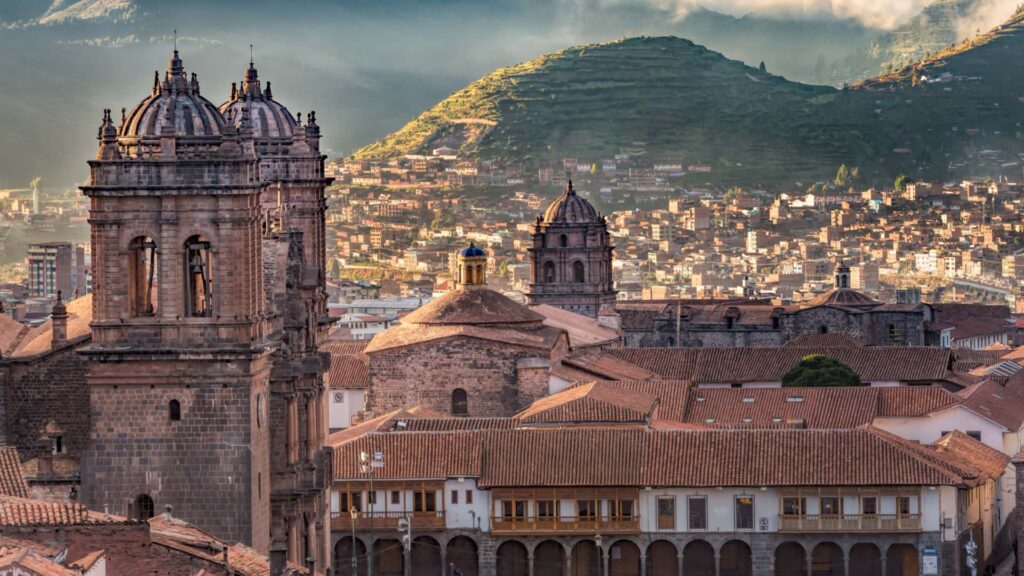
[IMAGEN – Archivo: “cusco-where-to-stay-luxury-hotel.jpg” | ALT: “Luxury hotel courtyard in downtown Cusco showing flat colonial stone architecture”]
Selecting a hotel located on a steep, uphill street forces your cardiovascular system to overwork during a period when it requires complete rest. Walking even fifty meters up an incline under these atmospheric conditions can induce severe fatigue. Therefore, choosing a flat base within the historic grid minimizes unnecessary physical exertion.
Additionally, atmospheric adjustments occur primarily during sleep, when your heart rate naturally slows down. If your room sits along a steep incline, returning from dinner becomes an unwanted aerobic workout that disrupts your recovery cycle. As a result, choosing a level location directly influences how fast your body adapts.
Experienced luxury travelers understand that physical comfort during the first forty-eight hours determines the success of subsequent excursions. If you compromise on location quality, you risk spending your valuable vacation days confined to a bed. For this reason, micro-topography must dictate your final booking decision.
Top Luxury Neighborhoods in Cusco for Discerning Travelers
The historic core contains distinct sectors, each offering radically different logistical realities for premium international visitors. Understanding these geographical boundaries prevents you from booking an inaccessible property that complicates daily tour departures. Specifically, the areas surrounding the main plaza provide the highest levels of structural convenience.
The Centro Histórico, particularly around Plaza Regocijo and Plaza Nazarenas, stands out as the premier zone for security and vehicular access. Properties here utilize historic colonial palaces while maintaining modern, flat entryways for luxury Mercedes-Benz sprinters and private SUVs. Consequently, you avoid the logistical nightmare of dragging baggage through crowded, narrow alleys.
Conversely, the picturesque district of San Blas presents significant physical obstacles despite its artistic charm. Most premium boutique hotels in this sector sit on narrow, stone stairways completely closed to motorized traffic. Therefore, choosing this neighborhood means you must walk up steep inclines every time you return to your suite.
To help you visualize these differences clearly, the following matrix compares the primary high-end sectors based on direct field evaluations:
Comparison of Luxury Districts in Cusco
District Sector
Vehicular Access
Elevation Profile
Noise Insulation
Oxygen Infrastructure
Plaza Nazarenas
Excellent / Direct
Level / Flat
High / Enclosed
Advanced / Complete
Plaza de Armas
Restricted Hours
Level / Flat
Moderate to Low
Available in Select Suites
San Blas Alta
None / Pedestrian
Very Steep Hills
High / Isolated
Limited Boutique Setup
Plaza Regocijo
Excellent / Continuous
Level / Flat
High / Modernized
Full System Integration
Premium Hotel Selection Criteria for a Seamless Experience
Evaluating a high-end property requires looking far beyond aesthetic interior design and premium thread counts. For an optimal stay, you must verify the specific environmental technologies implemented inside the historic stone walls. First, inquire directly about the presence of integrated oxygen-enrichment systems within the guest rooms.
These advanced systems pump supplemental oxygen into the room, effectively lowering the simulated altitude by thousands of feet while you rest. This technical feature prevents morning headaches and stabilizes sleep quality significantly. Therefore, prioritizing properties with this infrastructure guarantees a highly superior physical recovery.
Second, confirm the exact vehicle drop-off regulations applicable to the hotel entrance. Because local authorities enforce strict traffic rules within the historic center, some streets block passenger loading entirely. Choosing a property with a designated, private courtyard or a legal drop-off zone prevents stressful logistical delays.
Always email your selected hotel to confirm if emergency medical staff and oxygen concentrates are available on-site twenty-four hours a day. Many five-star properties maintain partnerships with private clinics like Clínica Pardo, ensuring immediate medical assistance directly inside your suite if symptoms of acute mountain sickness arise.
Maximizing Your Historic Center Base with Curated Local Experiences
Positioning yourself in a flat, accessible luxury district allows you to explore ancient inca history without undergoing physical strain. A well-located hotel serves as a seamless launchpad for elite, privately guided explorations. Because your transport can park directly outside the lobby, you completely bypass the chaotic crowds found at public bus terminals.
This logistical convenience becomes especially profitable when booking half-day historical itineraries that require precise timing. By avoiding traffic delays and uphill walks, you preserve your physical energy for the actual archaeological sites. Clearly, a smooth departure elevates the overall quality of your cultural immersion.
When you base your stay in a highly accessible zone, you can effortlessly transition from a relaxing morning to an exclusive historical journey. This seamless integration of premium lodging and elite guiding is exactly what sets a flawless vacation apart from a stressful trip.
For a completely optimized and expertly coordinated exploration of the ancient capital, consider booking your next excursion with a trusted local operator.
Essential Logistics: Expert Answers to Your Cusco Lodging Dilemmas
Planning a luxury stay at high altitude requires absolute clarity before you finalize your reservation. The following direct insights address the exact security, health, and transit concerns shared by premium international travelers. Use these field-tested answers to eliminate logistical risks and guarantee a seamless, stress-free arrival in the ancient capital.
No, many historic streets restrict vehicular traffic due to narrow colonial dimensions and strict municipal heritage laws. Original Inca stone foundations cannot be modified to accommodate large modern vehicles. Consequently, several high-end properties require guests to walk from designated perimeter drop-off zones.
Choosing a property with a certified, private interior driveway is the only way to guarantee direct access. Therefore, you must explicitly verify your hotel's specific layout before booking. This simple check prevents unexpected physical exertion immediately after your arrival.
No, specialized oxygenation systems require complex, modern HVAC engineering that cannot easily be retrofitted into four-hundred-year-old structures. Only a highly exclusive group of elite five-star properties feature fully integrated ambient oxygen systems. These systems naturally adjust the room atmosphere to simulate a significantly lower elevation.
Smaller boutique establishments usually offer portable oxygen concentrators instead. While these individual devices help during an emergency, they do not provide the continuous, ambient comfort of an engineered room. For this reason, travelers prioritizing sleep quality must confirm full system integration during the reservation process.
The sectors surrounding Plaza Nazarenas and Plaza Regocijo offer the highest levels of security in the entire city. These specific zones benefit from continuous municipal camera surveillance and a permanent presence of specialized tourist police officers. In addition, elite hotels deploy private security personnel outside their main entrances twenty-four hours a day.
As a result, these neighborhoods remain exceptionally safe, peaceful, and well-lit for evening walks. Premium visitors can walk to high-end restaurants without facing the chaotic crowds found near the outer transit hubs. Selecting a base in these guarded sectors ensures complete peace of mind throughout your stay.
Safeguarding your health during the first twenty-four hours requires a deliberate, protective routine. First, ensure you secure an accommodation situated on flat terrain to eliminate unnecessary cardiac strain. Second, keep your physical movement to an absolute minimum and rest horizontally for several hours immediately after check-in.
Dietary choices also influence how your body handles the atmospheric transition. Consume light meals consisting of simple carbohydrates and completely avoid heavy proteins or alcoholic beverages before sleeping. These steps, combined with drinking plenty of pure water, allow your respiratory system to adapt without entering a state of medical distress.
No, the artistic district of San Blas presents severe physical obstacles that can compromise visitor safety. The topography consists almost entirely of exceptionally steep cobblestone inclines and prolonged stone staircases. Because these historic walkways lack modern handrails, navigating them requires significant physical strength and perfect balance.
Furthermore, the narrow layout prevents emergency vehicles and private tour vans from reaching hotel lobbies directly. This lack of access means you must walk up steep gradients every time you return from an excursion. Therefore, individuals with mobility concerns or respiratory vulnerabilities should entirely avoid lodging in this sector.
Soundproofing capabilities vary drastically across the historic core due to strict structural preservation regulations. The peruvian Ministry of Culture prohibits properties from altering original colonial facades or replacing historic windows with modern frames. To mitigate this issue, premier hotels install heavy interior acoustic drapery and internal double-pane glass panels.
Despite these efforts, properties located directly on the main Plaza de Armas still experience noticeable ambient noise from local festivals and traffic. If you require absolute silence for deep recovery, select a property built around an enclosed, private interior courtyard. These architectural layouts naturally isolate your suite from external city noise.
Yes, reputable luxury establishments maintain direct communication protocols with English-speaking medical specialists who remain on call twenty-four hours a day. If you experience persistent symptoms of acute mountain sickness, the hotel concierge can summon a doctor to your suite immediately. These professionals travel with portable diagnostic equipment and specialized therapies.
Medical interventions often include prescribing targeted medications or administering localized intravenous hydration. These private treatments allow you to recover comfortably inside your room without traveling to an external hospital. Relying on your hotel's verified medical network ensures immediate, premium care the moment symptoms appear.
Securing a premium suite in this highly coveted sector requires planning at least six to eight months prior to your departure date. This lengthy lead time becomes essential if your travel schedule falls within the dry season, which spans from May to September. During these peak months, international demand completely overwhelms the limited inventory of five-star rooms.
The availability of specialized oxygen-supplemented suites is even more restricted due to their high necessity. Waiting until the last minute forces travelers to accept suboptimal accommodations on steep hills or noisy streets. Booking early guarantees your physical comfort and secures the logistical foundations of your trip.
Yes, recognized five-star properties employ professional bellhop staff trained to manage heavy luggage across irregular surfaces. These team members meet your private vehicle at the nearest accessible point to transport your bags safely to the reception desk. This service eliminates the physical strain of lifting heavy items under low oxygen conditions.
However, selecting an inaccessible hotel means your luggage must be transported over long distances via manual carts. This logistical delay can cause frustrating wait times during check-in and checkout windows. Ensuring your hotel features direct vehicular access keeps your transitions fast, efficient, and entirely seamless.
Yes, beginning your peruvian journey in the Sacred Valley is a highly effective physiological strategy. The valley floor rests at approximately 9,100 feet, which is significantly lower than the city's elevation of 11,152 feet. Spending your first two nights at this lower altitude allows your body to produce red blood cells gradually without experiencing severe physical shock.
Once your cardiovascular system stabilizes in the valley, transitioning up to the historic city center becomes much easier. This staggered approach eliminates the majority of altitude-related symptoms, ensuring you remain energized. Consequently, splitting your stay maximizes your physical well-being and protects your tour schedule from unexpected disruptions.
Born in the Andean village of Ancahuasi, I carry the history of Cusco in my blood. My journey began as a porter on the Inca Trail, where I learned the land by heart before spending the last eight years mastering its archaeology and history. Today, I specialize in guiding private family groups through Machu Picchu and the Sacred Valley, offering a clear, honest, and deeply local perspective. Let me handle the details of your trip so you and your family can experience the true heart of Peru through the eyes of a local expert.