The Sacred Valley of the Incas remains one of the most breathtaking destinations in the world. Located just outside the city of Cusco, this fertile valley served as the agricultural and spiritual heart of the Inca Empire. Consequently, it is a must-visit region for anyone seeking to immerse themselves in authentic Andean culture and history. In this comprehensive Sacred Valley Guide, we will explore the ancient ruins, traditional villages, and stunning landscapes that define this mystical area.
Furthermore, we at Machu Picchu Mountain Tours believe that the valley offers a unique connection to the past. The Urubamba River flows through the center of the region, feeding the land just as it did centuries ago. Because of its lower elevation compared to Cusco, many travelers use the valley to acclimatize before heading to Machu Picchu. Therefore, this Sacred Valley Guide will provide you with all the essential tips to make your journey truly unforgettable.
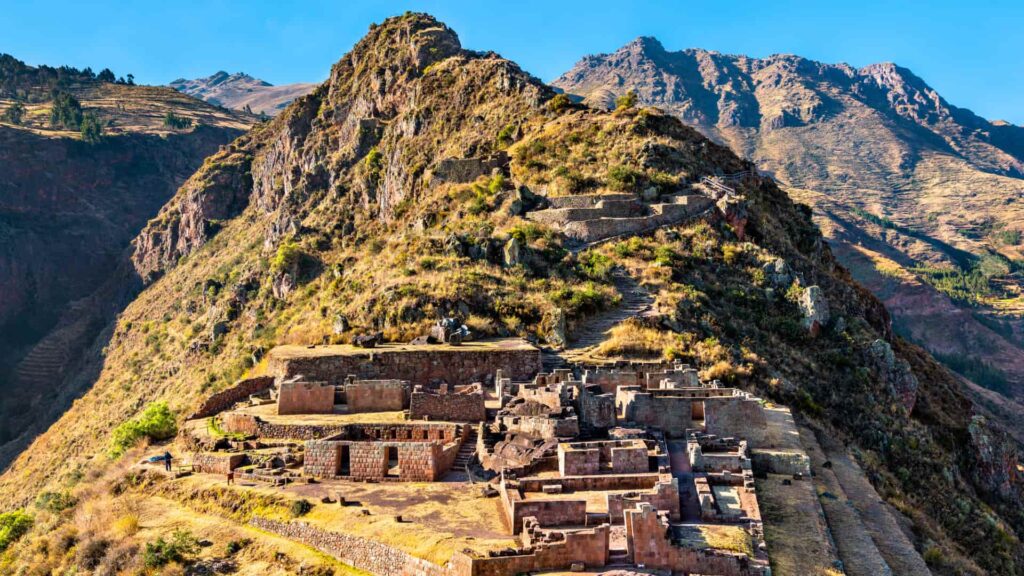
1. Pisac: Impressive Ruins and the Famous Artisan Market
Pisac serves as a spectacular gateway to the region and is a central highlight of any Sacred Valley Guide. The archaeological site sits high on a mountain overlooking the modern village. Specifically, it features some of the most impressive agricultural terraces in the Andes. These terraces not only provided food for the empire but also protected the mountain from erosion. Travelers often find that the precision of the stone masonry rivals even that of Machu Picchu itself.
In addition to its history, the town below hosts one of the most vibrant artisan markets in Peru. Every day, but especially on Sundays, local craftsmen gather to sell their handmade textiles, ceramics, and silver jewelry. This market provides an excellent opportunity to interact with the Quechua-speaking locals and learn about their traditional designs. Whether you are a history buff or a souvenir hunter, Pisac offers something for everyone.
Must-See Highlights in Pisac:
- The Intihuatana: Discover the “hitching post of the sun,” a sacred stone used for astronomical observations.
- The Temple of the Sun: Observe the incredible masonry used in the ceremonial center of the site.
- Ancient Burial Grounds: Look across the cliffside to see the thousands of small holes that once served as Inca tombs.
- The Artisan Market: Browse through stalls filled with colorful alpaca sweaters and intricate weaving.
- Traditional Ovens: Try a fresh empanada cooked in the massive colonial-style clay ovens located in the town square.
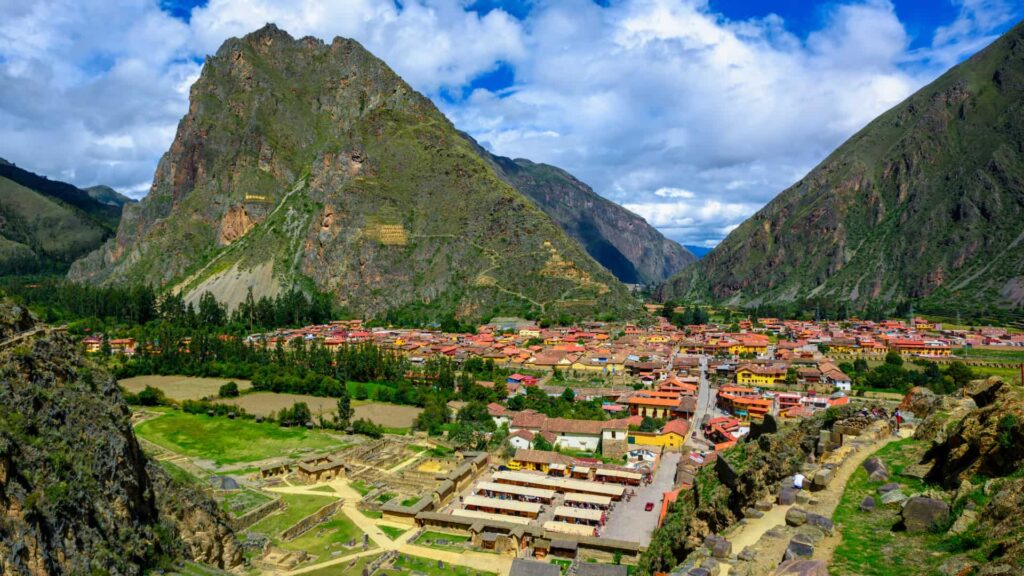
2. Ollantaytambo: The Living Inca City
Ollantaytambo remains one of the most fascinating locations for our Sacred Valley Guide. Unlike many other ruins, the town of Ollantaytambo is still inhabited today. Consequently, visitors can walk through narrow streets that still follow the original Inca urban layout. This “Living Inca City” features ancient stone water channels that still flow with fresh mountain water. It is a rare place where you can truly feel the continuity of history.
Furthermore, the towering fortress overlooking the town played a crucial role in Incan resistance. It was the site of a major battle where the Incas successfully defended their territory against Spanish conquerors. The massive stone terraces climb the hillside, leading to the unfinished Temple of the Sun. Because it is the primary starting point for the train to Machu Picchu, we highly recommend spending at least one night here to soak in the atmosphere.
Key Features of Ollantaytambo:
- The Sun Temple Monoliths: Marvel at the six massive pink rhyolite stones that weigh over 50 tons each.
- The Royal Baths: Visit the “Bañoz de la Ñusta,” where Incan princesses performed ritual purifications.
- Pinkuylluna Storehouses: Look across the valley to see the ancient granaries built high on the opposite cliff.
- Inca Streets: Wander through the kanchas (courtyards) that have remained unchanged for over 500 years.
- The Fortress Climb: Challenge yourself to climb the hundreds of stone steps for a panoramic view of the valley.
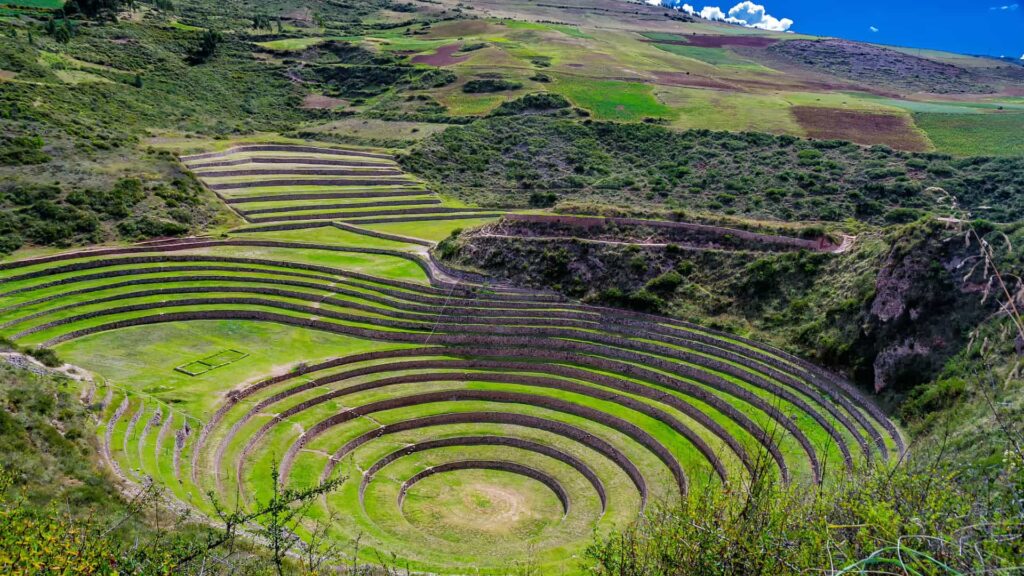
3. Moray: The Fascinating Agricultural Laboratory
Moray is perhaps the most intriguing archaeological site featured in our Sacred Valley Guide. At first glance, the site looks like a massive green amphitheater made of circular terraces. However, historians believe the Incas used this location as a sophisticated agricultural laboratory. Because the terraces vary in depth, they create a temperature difference of up to 15 degrees Celsius between the top and bottom.
In addition to its visual beauty, Moray demonstrates the Incas’ deep understanding of microclimates. Specifically, they used this site to experiment with different crops, such as corn and potatoes, to see how they would grow at various elevations. Therefore, Moray represents the scientific genius of a civilization that mastered its environment. It is a peaceful location that offers a profound look into the Incan relationship with the land.
Why Moray is a Must-Visit:
- Circular Terraces: Explore the three distinct sets of concentric circles carved deep into the earth.
- Microclimates: Experience the noticeable temperature change as you walk down into the lowest levels.
- Sophisticated Drainage: Learn how the Incas designed the site to prevent flooding, even during heavy rain.
- Scenic Surroundings: Enjoy the stunning backdrop of the snow-capped Vilcabamba mountain range.
- Photography Opportunities: Capture the geometric patterns of the terraces, which are unlike anything else in Peru.
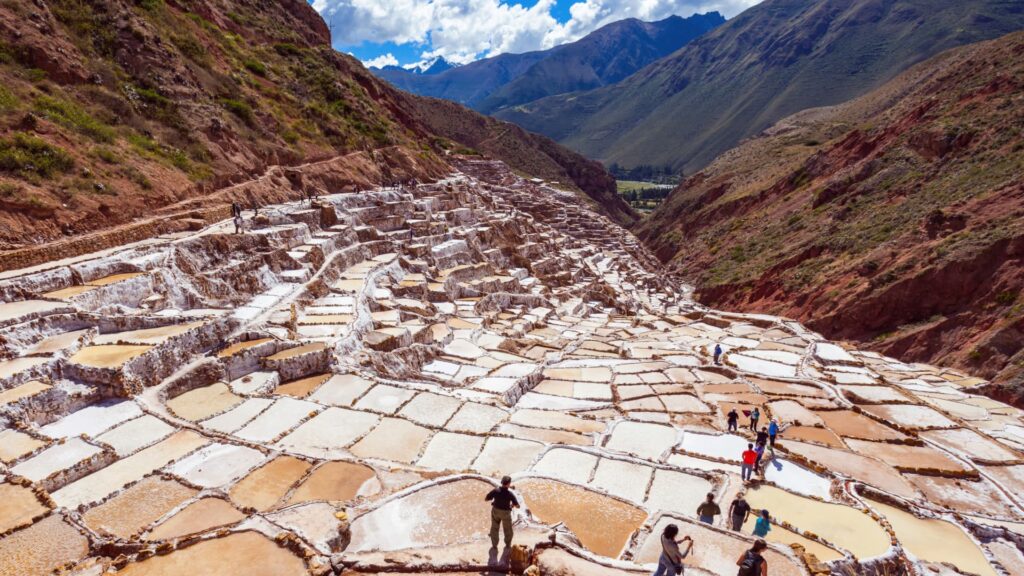
4. Maras Salt Mines: An Ancient Tradition Preserved
The Maras salt mines are a breathtaking sight that adds a unique flavor to any Sacred Valley Guide. For centuries, local families have harvested salt from these 3,000 evaporation ponds. A salty underground stream feeds the pools, which the community manages through a cooperative system. The contrast between the white salt pools and the brown mountain slopes creates a photographer’s paradise.
Furthermore, the salt produced here is famous worldwide for its high mineral content and pinkish hue. Families pass down the ownership of these ponds through generations, maintaining a tradition that predates even the Inca Empire. Visitors can observe the harvesters at work and purchase different varieties of salt directly from the local shop. Consequently, visiting Maras is not just a sightseeing tour; it is a way to support a living, ancient industry.
Highlights of the Maras Salt Mines:
- 3,000 Salt Ponds: View the massive network of pools cascading down the side of the Qaqawiñay mountain.
- Artisanal Harvesting: Watch locals using traditional wooden tools to scrape and collect the salt crystals.
- Pink Maras Salt: Buy a bag of the famous gourmet salt to take home as a unique and delicious souvenir.
- The Water Channel: Follow the narrow stream of saltwater that supplies the entire complex.
- Spectacular Views: Take in the wide-angle views of the valley floor from the various observation points.
5. Chinchero: The Birthplace of the Rainbow
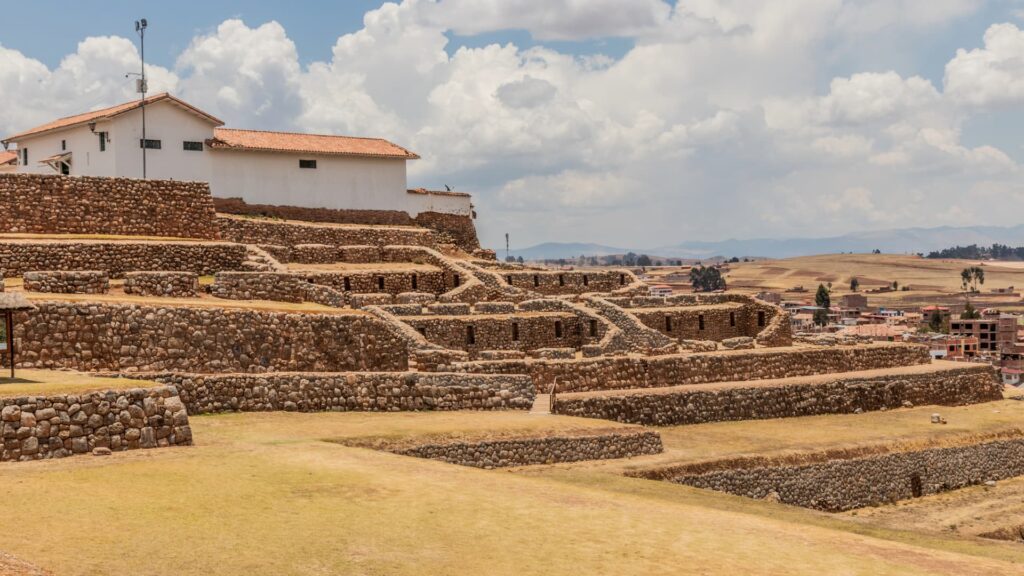
Chinchero is a traditional Andean village that holds a special place in our Sacred Valley Guide. Known by the locals as the “Birthplace of the Rainbow,” it sits at a higher elevation than the rest of the valley. The town features an impressive colonial church built directly on top of an Inca palace. This layered architecture serves as a vivid reminder of the complex history of the Peruvian Highlands.
Moreover, Chinchero is world-renowned for its textile traditions. Local women continue to use ancestral techniques to spin, dye, and weave wool from alpacas and sheep. They use natural ingredients, such as cactus parasites and dried plants, to create vibrant colors. When you visit Chinchero with Machu Picchu Mountain Tours, you will see a live demonstration of this incredible craft, which has remained unchanged for centuries.
Essential Experiences in Chinchero:
- Textile Demonstrations: Learn how artisans use cochineal and salt to create over 20 shades of red.
- The Colonial Church: Admire the beautiful frescoes and the ornate gold-leaf altar inside this 17th-century structure.
- Inca Plazas: Walk through the massive stone plazas where the Inca Tupac Yupanqui once lived.
- Sunday Market: Visit during the weekend to see locals in traditional dress bartering for goods.
- Agricultural Terraces: Explore the well-preserved terraces that lead down toward the Piuray Lagoon.
6. Best Time to Visit: Weather and Seasons
Choosing the right time to travel is a critical part of our Sacred Valley Guide. The region has two distinct seasons: dry and rainy. The dry season runs from May to September and offers clear blue skies and sunny days. This period is the most popular time for tourism because the weather is predictable. However, the nights can be quite cold, so we recommend packing several layers.
On the other hand, the rainy season from November to March brings a different kind of beauty. During these months, the Sacred Valley becomes incredibly lush and vibrant green. While you might encounter daily showers, they often pass quickly, leaving fresh air and fewer crowds. Therefore, if you prefer a quieter experience and don’t mind a little rain, the “green season” can be a magical time to visit.
Seasonal Comparison:
- May to September (Dry Season): Best for photography, hiking, and clear views of the peaks.
- October and April (Shoulder Months): Offers a balance of good weather and moderate crowds.
- November to March (Rainy Season): Best for lush landscapes, lower prices, and solitude at the ruins.
- June Festivities: Plan ahead if you want to witness the Inti Raymi and other major cultural festivals.
- Packing Essentials: Always bring a waterproof jacket and sun protection, regardless of the season.
7. How to Get Around: Transport and Logistics
Navigating the region is simple if you follow the advice in this Sacred Valley Guide. Because the valley is long and the sites are spread out, you must plan your transportation carefully. Private Tours are the most popular option for travelers with limited time. They allow you to visit Pisac, Ollantaytambo, and Chinchero all in a single, well-organized day. At Machu Picchu Mountain Tours, we provide expert guides who bring the history of these sites to life.
Alternatively, if you are a budget-conscious traveler, you can use the local Colectivos (shared vans). These vans run frequently between Cusco and the main valley towns like Urubamba and Pisac. For the more adventurous, Mountain Biking or Hiking between the Maras salt mines and Moray is a fantastic way to see the terrain. No matter your choice, the stunning views out the window will make any commute enjoyable.
Transportation Options:
- Private Guided Tours: Enjoy a stress-free experience with door-to-door service and historical insights.
- Colectivos: Use these affordable vans for a local experience; they depart when full from various terminals in Cusco.
- The Train: Take the train from Ollantaytambo to Aguas Calientes for the most direct route to Machu Picchu.
- Taxis: Hire a driver for the day if you want flexibility without the cost of a full tour.
- Hiking Trails: Walk the ancient paths that connect the small villages for an intimate look at rural life.
Conclusion
The Sacred Valley is a destination rich in history, culture, and natural beauty. Whether you explore the ancient ruins, shop for handcrafted souvenirs, or immerse yourself in Andean traditions, this region offers an unforgettable experience for every traveler. This Sacred Valley Guide provides the foundation for your journey, but the true magic happens when you step onto the ancient stones yourself.
Are you ready to discover the wonders of the Incas? Book your Sacred Valley adventure with Machu Picchu Mountain Tours today and let us show you the heart of the Andes!