Most adventurers arriving in Cusco are quickly blindsided by the true cusco to rainbow mountain distance and the unforgiving 5,200m (17,060ft) altitude. Dreaming of the peaks is easy; however, the reality of the thin Andean air often turns a bucket-list dream into a physical struggle.
Consequently, selecting a low-budget tour usually means enduring cramped transport without medical support, leaving you vulnerable to altitude sickness. You deserve more than a risky gamble with your health when facing one of the most demanding terrains in the Peruvian Andes.
Machu Picchu Mountain Tours provides the sophisticated solution you require for a safe, comfortable, and triumphant summit. By combining medical-grade oxygen with senior expert guidance, we ensure you conquer Vinicunca with the dignity and security that a premium traveler expects.
Navigating the Cusco to Rainbow Mountain Distance Safely
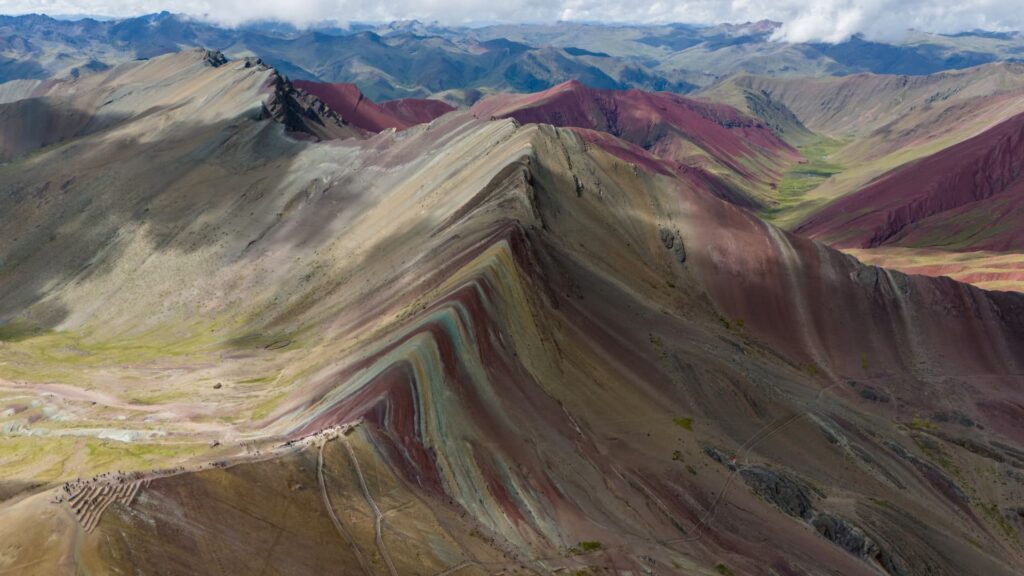
Understanding the cusco to rainbow mountain distance is the first step toward a successful expedition. The mountain is located approximately 100 kilometers (62 miles) southeast of Cusco. While the distance sounds manageable, the rugged Andean geography dictates a 3-hour drive each way.
Total Travel Time: What to Expect from Cusco
Your journey begins before dawn to beat the massive crowds and unpredictable mountain weather. Therefore, the quality of your transport determines your physical readiness for the trek. A standard bus often lacks the suspension and space needed for recovery, whereas a premium private service transforms these six hours of travel into a period of strategic rest.
Road Conditions and Regional Logistics
The route through Cusipata involves winding roads and significant elevation gains. Consequently, the mechanical integrity of the vehicle is not just a matter of comfort—it is a critical safety requirement. High-performance vans equipped with specialized tires and climate control are essential for navigating these high-altitude passes.
[COMPARATIVE DATA TABLE: LOGISTICS & COMFORT]
| Feature | Standard Public/Budget Bus | Premium Private Service (MPMT) |
|---|---|---|
| Travel Time (One Way) | 3.5 – 4 Hours | 2.5 – 3 Hours |
| Seat Configuration | Narrow / Non-Reclining | Ergonomic / Extra Legroom |
| Oxygen Supply | None or Basic Tank | Full Medical-Grade Oxygen Kits |
| Group Size | 20 – 30 Passengers | Small Groups (Max 8) |
| Pick-up Window | 3:00 AM – 4:00 AM (Multiple stops) | Flexible / Direct from Hotel |
Moreover, choosing a premium service minimizes unnecessary stops at overcrowded roadside “restaurants.” Instead, we prioritize your nutritional safety and time, allowing you to arrive at the trailhead energized rather than exhausted.
Why is Rainbow Mountain Peru Colorful? The Geological Answer
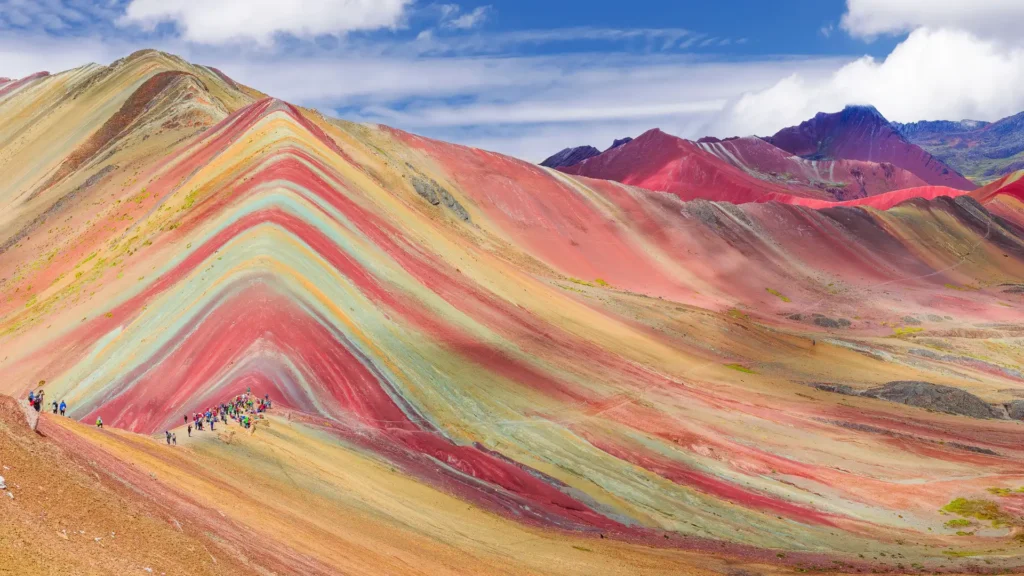
The question of why is rainbow mountain peru colorful transcends mere aesthetics; it is a lesson in planetary history. These vibrant stripes are the result of 65 million years of sedimentary layers interacting with the extreme Andean climate.
A Masterpiece of Mineral Oxidation
The visual spectacle occurs when different minerals are exposed to oxygen and water at high altitudes. For instance, the intense reds you see are the result of iron oxide, much like the process of rust but on a monumental scale. Consequently, every hue represents a specific chapter of the Earth’s geological evolution.
Tectonic Shifts and Visible History
Originally, these layers were deposited horizontally at the bottom of ancient lakes and rivers. However, the same tectonic forces that created the Andes Mountains pushed these layers upward, tilting them into the vertical stripes visible today. Therefore, standing before Vinicunca is effectively witnessing a cross-section of the Earth’s crust.
[AUTHORITY BOX: THE CHEMICAL PALETTE OF VINICUNCA]
Our geological experts have identified the specific compounds responsible for the mountain’s fame:
- Pink/Fuchsia: Mixture of red clay, fushitas, and recycled sand.
- Deep Red: Iron-rich clays (iron oxide) and Argillites.
- Green: Rich in Phyllites and ferro-magnesium clays.
- Mustard Yellow: Calcifying sandstone rich in sulfur minerals and Limonite.
- Purple/Lavender: Mixture of Goethite and oxidized manganese.
This scientific complexity is what makes the summit a profound intellectual achievement. Consequently, our guides are trained to explain these phenomena, ensuring your journey is as educational as it is visually stunning.
Selecting Your Vinicunca Trek: Comparing the Two Main Routes
You can reach the summit through two primary access points, each offering a distinct level of physical exertion. Selecting the path that aligns with your fitness level is essential for preventing respiratory distress and maximizing your enjoyment of the 7 colors mountain.
The Cusipata Route: Shorter Hike and the Red Valley
The Cusipata route is currently the most popular choice for travelers seeking efficiency. It offers a shorter hike, typically taking 1.5 hours to reach the main viewpoint. Furthermore, this path provides the option to extend your trek into the stunning Red Valley, a high-altitude desert that few tourists ever witness.
The Pitumarca Route: Original Trail and Fewer Crowds
If you prefer a more traditional and secluded experience, the Pitumarca route remains the connoisseur’s choice. Although the hike is longer—approximately 3 hours—it avoids the large morning crowds. Consequently, you gain a more intimate connection with the local communities and the surrounding Ausangate glacier.
Why Professional Guidance Matters at 17,000 Feet
Regardless of the route, trekking at this altitude is a serious physiological undertaking. Professional guides do more than show the way; they monitor your vital signs and oxygen saturation levels. Therefore, having an expert who understands the nuances of mountain safety is the only way to guarantee a successful return.
Don’t let logistics or altitude compromise your Peruvian legacy. At Machu Picchu Mountain Tours, we specialize in high-authority, safety-first expeditions designed for the discerning traveler.
Book your private, oxygen-equipped tour today and ensure that your encounter with the Rainbow Mountain is defined by comfort, expertise, and absolute security.
Senior Expert Protocols for the Rainbow Mountain Peru Summit
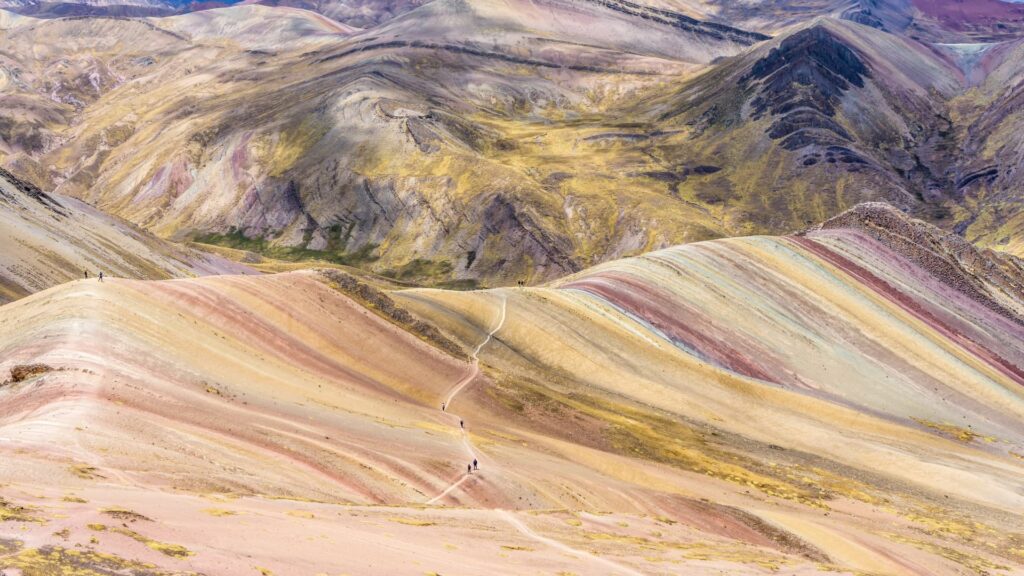
Reaching an altitude of 5,200 meters (17,060 feet) requires more than determination; it demands a strategic physiological approach. Most hikers fail because they underestimate the impact of reduced oxygen pressure on the cardiovascular system.
The Oxygen Advantage: Why We Carry Specialized Tanks
At the summit of Vinicunca, there is approximately 50% less oxygen available compared to sea level. Consequently, your heart and lungs must work twice as hard to sustain movement. We carry medical-grade oxygen tanks and pulse oximeters on every tour to monitor your safety in real-time.
Essential Packing List for Andean Microclimates
Weather in the high Andes changes with violent speed. Therefore, we recommend the “onion system” of clothing: breathable base layers, a thermal mid-layer, and a high-quality waterproof outer shell. Moreover, high-altitude UV radiation is extreme, making polarized sunglasses and specialized sunscreen non-negotiable items.
Acclimatization Protocols for International Travelers
Never attempt this trek on your first day in Peru. Instead, we strongly advise spending at least 48 to 72 hours in Cusco to allow your body to produce more red blood cells. Proper hydration and light meals during this window are the best defense against acute mountain sickness.
The altitude is the only variable in the Andes that you cannot negotiate with. Most people focus on the distance, but the real challenge is the atmospheric pressure. A premium tour isn’t just about luxury; it’s about having the oxygen and professional monitoring necessary to ensure a safe descent. We don’t just guide you; we protect your health. — Jorge M., Senior Expedition Leader at Machu Picchu Mountain Tours.