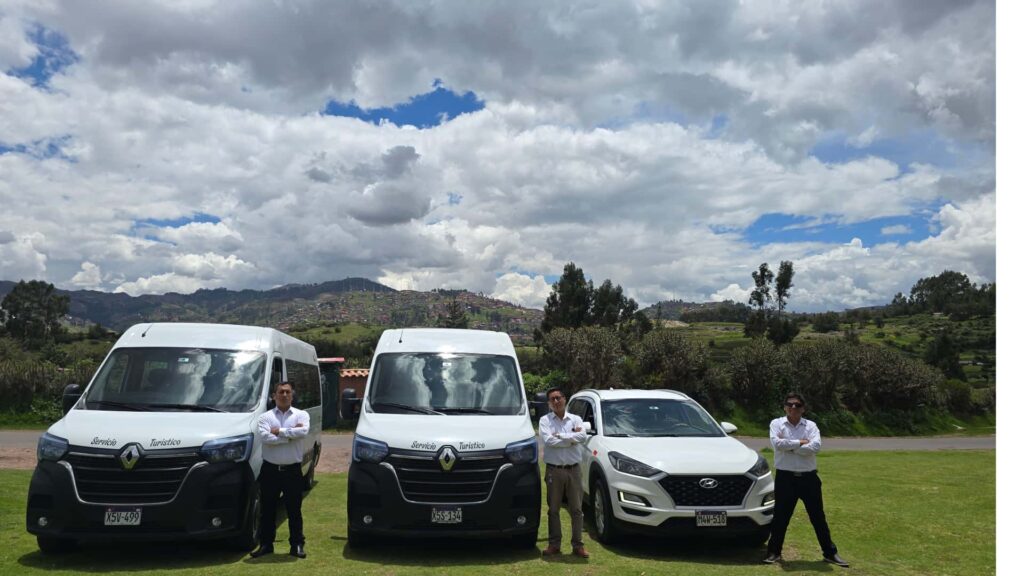
Landing at Alejandro Velasco Astete International Airport immediately forces your body to function with 30% less oxygen than at sea level. For sophisticated travelers between 30 and 60 years old, this sudden change often triggers Acute Mountain Sickness (AMS) during the first sixty minutes on the ground. Most visitors feel an immediate tightening in their temples and a persistent shortness of breath as they navigate the terminal. Consequently, the vehicle you choose for your initial transition represents the most significant health decision of your entire Peruvian expedition.
Many visitors mistakenly assume that any standard vehicle can manage the complex logistics of the Southern Highlands. Because of this misconception, they often find themselves trapped in cramped, unauthorized taxis that lack emergency medical equipment. This lack of preparation agitates physical symptoms and increases the risk of a medical emergency during the drive to the hotel. You deserve an arrival protocol that treats your biology with the respect it requires at 11,152 feet. Therefore, a specialized arrival service is an indispensable step for your physical well-being.
Machupicchu Mountain Tours provides a specialized arrival protocol that prioritizes your physiological stability above all else. Our service integrates medical-grade technology with professional Andean logistics to ensure a seamless entry into the Incan capital. By choosing our refined tourist minivan service, you secure an environment designed for recovery rather than just a simple transfer. In fact, we ensure that your body begins the acclimatization process the moment you sit in our climate-controlled cabins. We transform the stress of arrival into a period of supervised wellness.
Technical Excellence: The Architecture of a Safe Tourist Minivan
A luxury arrival experience requires a vehicle that functions as a mobile sanctuary against the harsh Andean environment. Specifically, our fleet consists of modern Mercedes-Benz Sprinters and high-end SUVs that undergo rigorous technical inspections every 24 hours. Because the roads between Cusco and the Sacred Valley involve steep grades and sharp turns, mechanical reliability serves as our baseline for safety. Therefore, we never utilize vehicles older than three years for our international guests.
Advanced Climate Control and Air Purification
High-altitude air is not only thin but also extremely dry and often filled with city dust. For this reason, every tourist minivan in our fleet features dual-zone climate control and advanced HEPA air filtration systems. These systems maintain a stable internal pressure and humidity level, which significantly reduces the initial stress on your respiratory tract. Consequently, you can breathe comfortably while reclining in ergonomic leather seats designed for long-distance lumbar support.
Stabilization and Motion Sickness Prevention
Standard local transport often uses aging suspension systems that amplify every bump in the colonial cobblestones. In contrast, our vehicles utilize electronically controlled stabilization to minimize lateral movement on mountain passes. This technical feature is vital for travelers who are sensitive to motion sickness, a condition often worsened by hypoxia. As a result, you avoid the dizziness associated with low-quality transport and reach your destination feeling mentally clear.
“Technical consistency is the foundation of Andean safety. We don’t just provide a ride; we provide a controlled environment where the traveler’s heart rate can stabilize during the most difficult hour of their trip.” — Wilfredo Cjumo Lopez, Head of Operations at Machupicchu Mountain Tours.
[Private Guided Tours in Cusco][ENLACE INTERNO]
Luggage Security and Space Allocation
Sophisticated travelers often carry high-value camera gear, hiking equipment, and multiple large suitcases. Standard sedan taxis simply cannot accommodate these items without compromising passenger comfort or safety. Our tourist minivan models feature dedicated cargo areas that keep your belongings secure and separate from the seating cabin. Consequently, you enjoy maximum legroom and a safer internal environment where bags cannot shift during the winding descent to the Sacred Valley.
Physiological Security: Travel with Medical-Grade Oxygen
Operating at 3,399 meters above sea level requires more than just logistical expertise; it requires clinical understanding. Many unacclimatized travelers suffer from “soroche” because they do not have access to supplemental support during their first hour of exposure. Because our tourist minivan service focuses on your health, we equip every vehicle with portable, high-flow oxygen tanks and clean, disposable masks. This proactive care prevents a minor headache from escalating into a severe case of altitude sickness.
The Role of Supplemental Support in Acclimatization
We believe that oxygen should never be considered an optional extra in high-altitude environments. For this reason, our staff monitors your condition throughout the drive to ensure your saturation levels remain within a safe range. If you feel dizzy or short of breath, our drivers can administer oxygen immediately. This “first response” capability often prevents pulmonary edema and other serious complications. Indeed, this service is a safety requirement for senior travelers and families arriving from sea level.
The Science of Oxygen Saturation at 11,000 Feet. At sea level, a healthy adult maintains an SpO2 level between 95% and 100%. Upon landing in Cusco, atmospheric pressure drops to approximately 680 hPa. Without support, your blood oxygen saturation can plummet to 88% within minutes. Professional tourist minivan services provide a high-flow environment that allows the heart rate to stabilize. Consequently, this reduces the metabolic stress on your kidneys and brain, shortening the acclimatization window by up to 24 hours.
Hydration and Metabolic Stability
Similarly, we provide fresh, mineral-rich bottled water and local Andean grains as part of our arrival kit. Dehydration is the primary catalyst for altitude symptoms because the kidneys must work harder to adjust blood pH levels. By maintaining high hydration levels inside the tourist minivan, you help your body produce red blood cells more efficiently. Therefore, our arrival protocol addresses the chemical needs of your system as much as your physical comfort.
Drivers as Trained Wellness Stewards
Our drivers receive intensive training in high-altitude emergency protocols and basic life support. Because they understand the early signs of altitude distress, they can adjust the cabin environment before you even realize you need it. This level of expert supervision is essential for travelers who value their safety and physical longevity. It transforms a simple ride into a supervised medical transition. For this reason, our staff remains the highest-rated in the Cusco region for safety.
Security and Logistics: Comparing Private vs. Public Risks
Choosing the right way to move around the city is a decision about risk management for your entire vacation. While public buses and shared shuttles exist, the technical differences in safety standards remain immense. Specifically, shared transport often involves long wait times in the hot sun and multiple stops at different hotels. This extra physical exertion increases your exhaustion and limits your time for essential rest. Because we prioritize your schedule, our service ensures a zero-minute wait time.
The Dangers of Unregulated Mountain Transport
Unauthorized taxis operating near the airport perimeter usually lack the specific insurance required for international tourists. Furthermore, these vehicles rarely undergo the technical inspections necessary for the steep grades of the Andes. Language barriers often lead to pricing disputes or, more concerningly, stops at unverified shops where travelers face pressure to buy goods. Pre-booking your tourist minivan eliminates these variables and guarantees an international professional standard for every mile of your journey.
Arrival Logistics in Cusco
| Feature | MT Private Minivan | Standard Airport Taxi | Shared Tourist Shuttle | Public Bus |
|---|---|---|---|---|
| Medical Oxygen | Included (Clinical) | No | No | No |
| Real-time GPS | Yes (Monitored) | No | Limited | No |
| Bilingual Support | Guaranteed | Unlikely | Limited | None |
| Wait Time | 0 Minutes | 10-15 Minutes | 30-60 Minutes | Variable |
| Vehicle Age | Under 3 Years | Variable | 5-10 Years | Not Recommended |
Punctuality as a Critical Security Feature
Seeing a professional representative waiting with a clear sign provides immediate psychological relief after a long international flight. This connection removes the need to haggle or navigate through the crowds outside the terminal. Consequently, you reach the safety of your hotel much faster, which allows your body to start resting earlier. Punctuality is not just about time; it is about reducing the physical toll of travel on your system. For this reason, we treat punctuality as a core security feature.
Real-Time Monitoring and Routing
We equip every tourist minivan with integrated GPS tracking technology to ensure maximum safety. Our dispatch office monitors your route in real-time to anticipate traffic delays or road closures caused by local festivals. This technical oversight ensures that your driver always follows the most efficient and secure path. Consequently, you spend less time in Andean traffic and more time recovering in your room. This oversight also allows us to coordinate perfectly with your hotel concierge.
4. Strategic Sacred Valley Logistics for Health Recovery
Experienced travelers now often bypass the city on their first day and head directly to the Sacred Valley. Towns like Urubamba and Ollantaytambo sit at 9,000 feet, which is 2,000 feet lower than Cusco. This elevation difference provides a much gentler environment for the heart and lungs. Our tourist minivan service specializes in these strategic routes designed for health recovery. Descending immediately upon landing is the single most effective strategy for avoiding severe altitude symptoms.
The Technical Benefits of Immediate Descent
The drive from the airport to the valley floor takes approximately 90 minutes of scenic travel. During this journey, you will cross high mountain passes before descending into a more oxygen-rich climate. Our drivers use specialized braking and steering techniques to reduce motion sickness on these winding Andean roads. As a result, the transition becomes a relaxing part of your itinerary rather than a physical ordeal. Specifically, we focus on the Chinchero route for its superior road quality.
Customizing Your Arrival with Essential Stops
If your energy levels allow, we can include brief stops at local weaving centers or the Maras Salt Mines. However, we always prioritize your physical condition over sightseeing during the first day. If you feel fatigued, your driver will take the most direct route to your hotel. This flexibility ensures that the schedule adapts to your body’s needs. Because of this, you can pick up medication or snacks without any pressure from other passengers.
“We don’t just move people; we manage altitude transitions. A direct descent to the Sacred Valley in a climate-controlled vehicle is the difference between starting your trip with a headache or with a clear mind.” — Wilfredo Cjumo Lopez, Senior Logistics Coordinator.
Navigating the Technical Road to Ollantaytambo
The road to Ollantaytambo requires high levels of driver concentration because of its narrow passes and sudden weather changes. We ensure that our staff is well-rested and expert in these specific mountain conditions because your safety is our absolute priority. Therefore, you can focus on the spectacular views of the Vilcanota mountain range while we manage the logistics. This professional handling ensures a safe arrival at the gateway to the train to Machu Picchu.
Preparing for Local Festivals and Events
Additionally, Cusco often hosts large religious celebrations like Inti Raymi or Corpus Christi, which can paralyze city traffic. Our logistics department monitors the local calendar to anticipate these delays. We adjust our routes dynamically to ensure you do not get stuck in a parade or crowd. This proactive planning protects your valuable time and reduces the stress of arriving during peak seasons. Consequently, you arrive at your hotel on schedule, regardless of local events.