

You imagine stone terraces, and then a llama steps onto your photo. Many travelers are surprised that Machu Picchu animals are part of the visit, and the wildlife is one of its quiet attractions. Others expect jungle safaris and leave disappointed, because the best sightings need patience, luck and the right guide.
We are Machupicchu Mountain Tours, a locally owned operator in Cusco, and our guides see this wildlife on every trip. Here is what you will probably see, what is rare and how to watch animals respectfully.
Machu Picchu Animals You Are Most Likely to See
Some animals are almost guaranteed. They live on or around the citadel and are used to visitors.
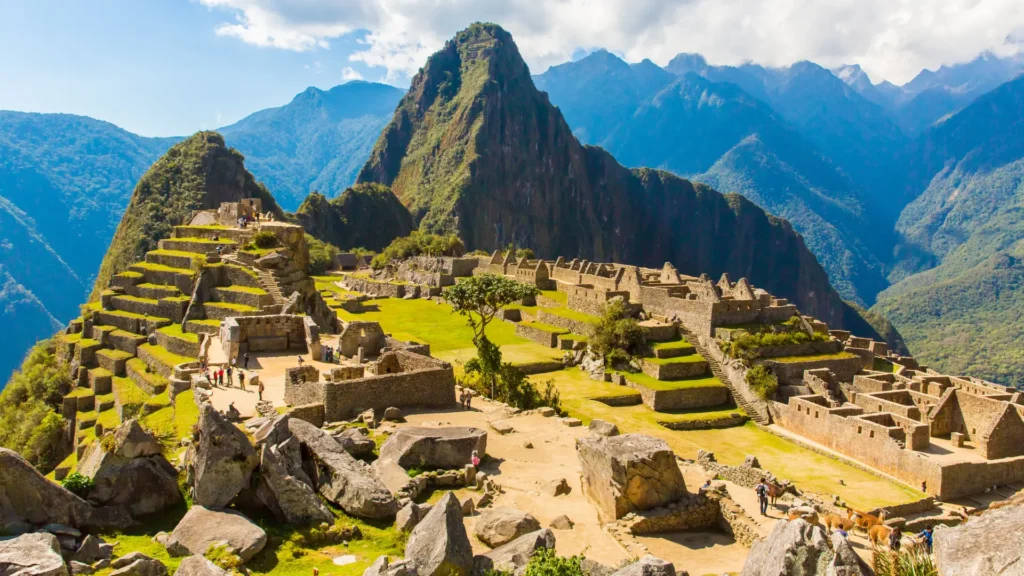
Llamas and Alpacas
A small group of llamas and alpacas roams the upper terraces. They are the most photographed Machu Picchu wildlife, and they often rest on the grass between the ruins.
- Where: the terraces near the main plaza and the upper areas
- Best time: early morning or late afternoon
- Tip: stay at a distance and never touch or feed them
Mountain Viscachas
Viscachas look like a cross between a rabbit and a squirrel. You may spot them sunbathing on rocks among the walls, especially when the sun comes out.
- Where: stone walls and rocky edges
- Best time: sunny moments, early or late
- Tip: stay still and quiet, and they often stay in view
Birds and Hidden Wildlife
The sanctuary around the citadel protects cloud forest, and cloud forest is rich in birds and plants. You will need more patience here.
Birds Worth Watching
More than 400 bird species have been recorded in the sanctuary. Hummingbirds are among the most common, and sharp-eyed visitors can see tanagers and other forest birds along the paths.
- Andean cock-of-the-rock: Peru’s national bird, with bright red or orange males, found in cloud forest
- Hummingbirds: quick visitors to flowering plants
- Condors: sometimes seen soaring over the high valleys, though more likely on other routes
Why This Place Is So Rich in Life
The sanctuary spans a steep range of altitude, from warm valley floors up to high peaks. Each band of elevation holds different plants and animals. Machu Picchu itself sits at about 2,430 m (7,970 ft) on the edge of the Amazon basin, where cloud forest meets Andean habitats. That mix explains why the area is home to hundreds of bird species and, by common estimates, around 300 orchid species.
The Spectacled Bear
The spectacled bear is the only bear native to South America. It is mostly herbivorous and lives in cloud forest. Sightings in or near the ruins are rare, so do not plan your trip around seeing one.
When and Where to See Wildlife
Your chances change with season, time of day and route.
Best Times for Animal Watching
- Early morning: animals are more active and crowds are thin
- Dry season: clearer weather and easier trail walking
- Wet season: greener forest and more birds, but more cloud
For month-by-month conditions, see our guide to the best time to visit Machu Picchu.
Routes With More Wildlife
The citadel gives you llamas, viscachas and birds. Multi-day treks cross cloud forest and give you more bird and plant diversity. Compare routes in Inca Trail, Salkantay and Lares or choose the Inca Trail 4 days for the most forest time on the classic route.
Compare Two Ways to See Wildlife
| Point | Typical large-group tour | Machupicchu Mountain Tours |
|---|---|---|
| Group size | Large, noisy groups | Small groups, quieter pace |
| Guide knowledge | Basic overview | Expert bilingual guides who point out wildlife |
| Timing | Fixed midday slot | Early start options |
| Flexibility | Little time to watch | Pauses for photos and sightings |
Watch Wildlife Respectfully
The animals live here, and visitors are guests. Simple habits protect them.
Rules to Follow
- Keep your distance. Do not approach or chase animals.
- Do not feed them. Human food harms wildlife.
- Stay on the paths. Leaving them damages plants and habitats.
- Keep noise low. Quiet visitors see more.
- Take nothing. Leave plants, flowers and stones where they are.
Good for Families
Llamas and viscachas make the visit fun for children. Explain the rules beforehand so they enjoy it safely. See our things to do at Machu Picchu for family-friendly ideas, and our Machu Picchu 1-day tour by train for an easy day.
Plan the Rest of the Trip
Check Machu Picchu train tickets, review whether Machu Picchu is open on your date and keep our Machu Picchu travel guide close.
Frequently Asked Questions (FAQ)
Are there animals at Machu Picchu?
Yes. Llamas and alpacas live on the terraces, and viscachas and many birds live in the area.
- Llamas are the easiest to see.
- Birds are numerous in the surrounding forest.
- Larger mammals are rarely seen.
Look first on the upper terraces, early in the day.
Can I touch the llamas?
No. Keep a distance and let them rest.
- They may kick or spit if disturbed.
- Feeding is not allowed.
- Close contact stresses the animals.
Take photos from a respectful distance.
Will I see a spectacled bear?
Probably not. Sightings are rare, and the bears are shy.
- They live mainly in cloud forest.
- They are mostly herbivores.
- Guides cannot promise a sighting.
Treat a bear sighting as a bonus, not a goal.
What birds can I see at Machu Picchu?
The sanctuary hosts hundreds of species, including hummingbirds and the Andean cock-of-the-rock.
- Hummingbirds visit flowering plants.
- The cock-of-the-rock lives in cloud forest.
- Early morning is best for birds.
Bring binoculars if you love birdwatching.
Are the animals dangerous?
Generally no, but they are wild and should be respected.
- Do not approach animals closely.
- Do not feed or tease them.
- Watch children near llamas.
Keep a calm distance and follow your guide’s advice.
What is the best time of day to see wildlife?
Early morning, when it is cooler and quieter.
- Animals are more active.
- Light is soft for photos.
- Fewer visitors means less disturbance.
Choose an early entry slot if wildlife matters to you.
